Jewlery professions
Designer
 Designer
Job profile
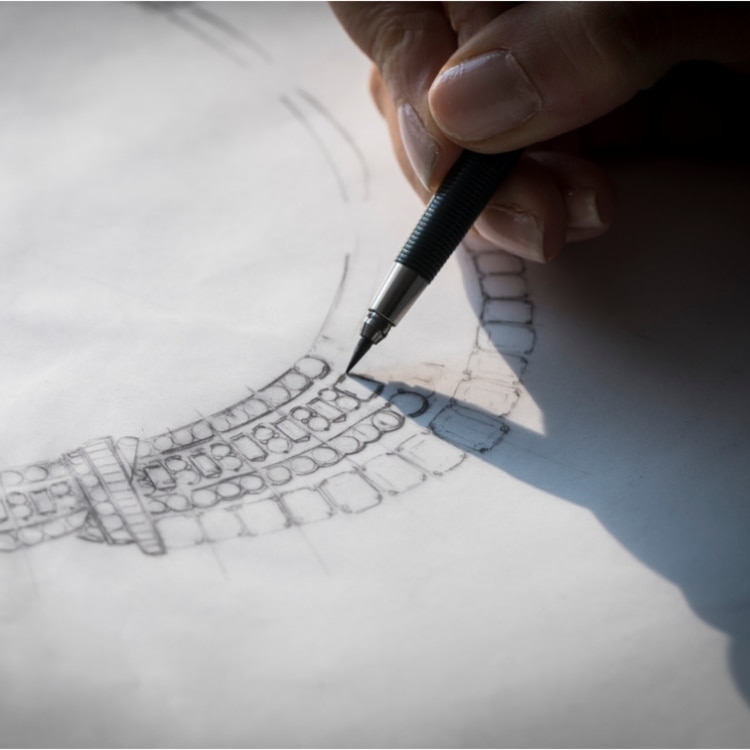
Designers imagine and sketch new creations around a central theme. This is the first step in the creative process. Once the sketch is approved, the designer depicts the future creation in great detail, at scale and from various perspectives (e.g. front, overhead view and profile for rings).

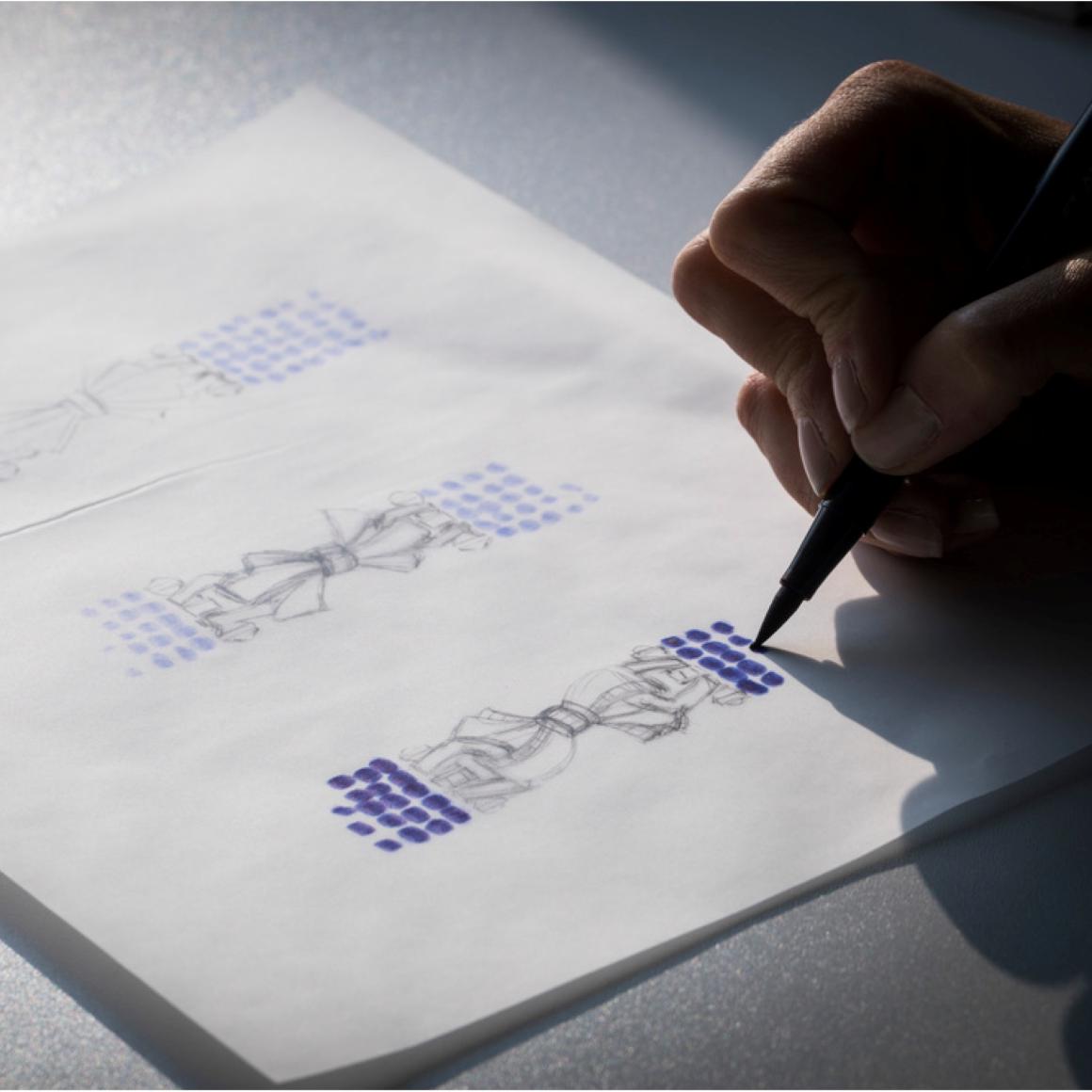
Designers take inspiration from their surroundings and the Maison’s heritage
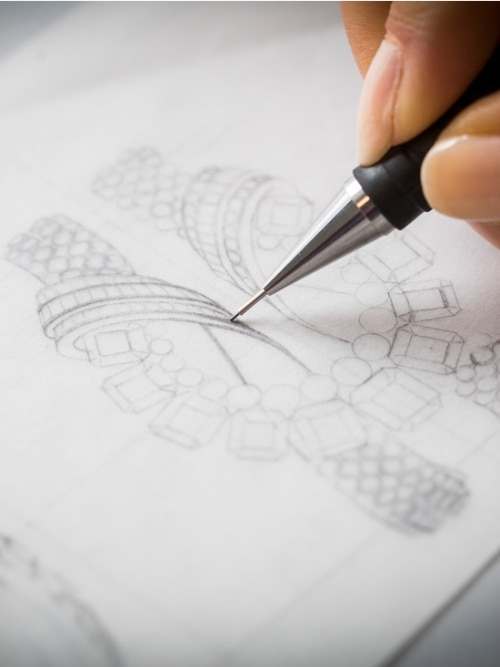
“de Mains en mains” introduces the jewelry professions and makes them accessible to all
The initiative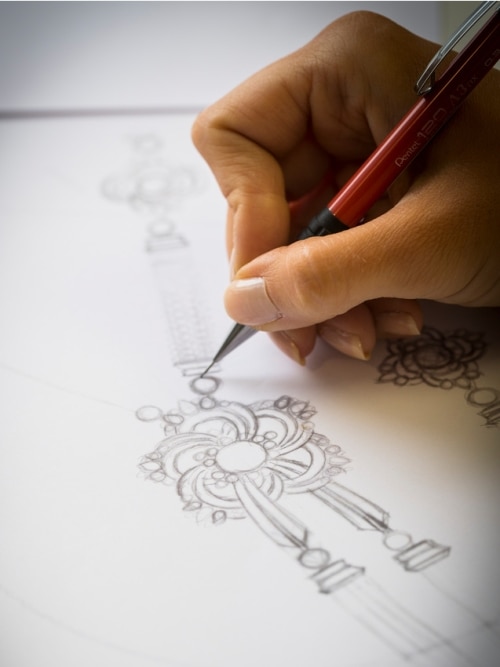
“No two days are the same. We might do research for an initial sketch, but also meet with jewelers in various locations throughout the workshops.”
Angela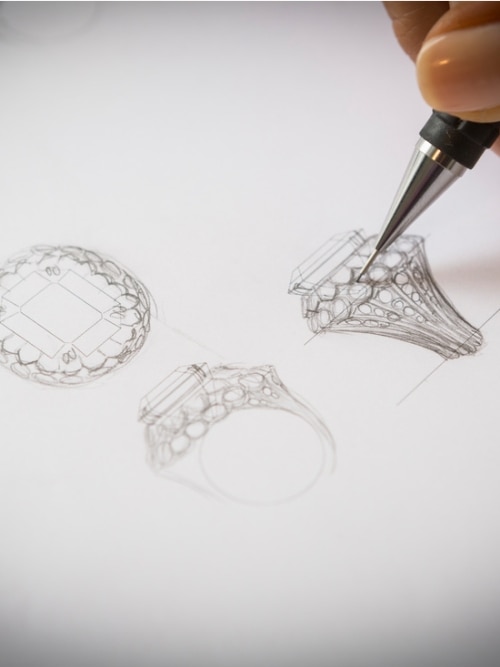
Prerequisites: high school diploma or equivalent
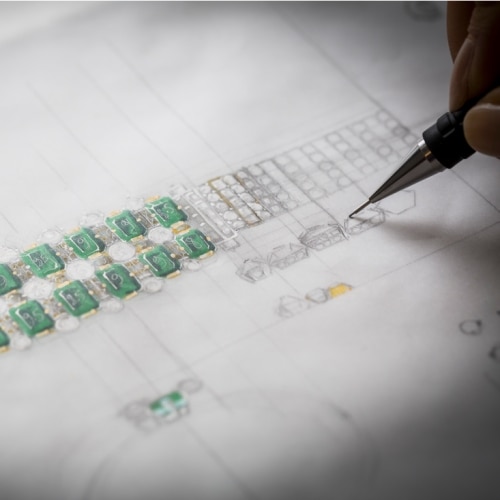
A designer's main tools include a pencil, tracing paper, an eraser and a ruler.
Skills
Discover the three key attributes of a designer
Curiosity
Observation is a central part of the job. A designer must be interested in understanding the structure of objects.
Thoroughness
To design a piece of jewelry, you mustn’t overlook even the slightest detail!
Artistic flair
To become a designer, you have to love... drawing, sketching, doodling.
Tools
The main tools of the designer
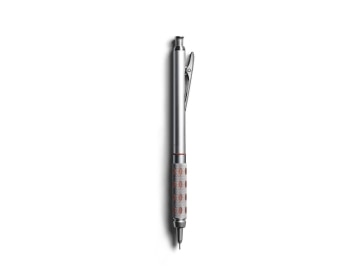
Criterium
Mechanical pencil with a fine, retractable lead used by the designer to draw precise and consistent lines. In jewelry making, it allows sketching the outlines of a piece with a constant line thickness, which is essential for the technical clarity of the drawing.
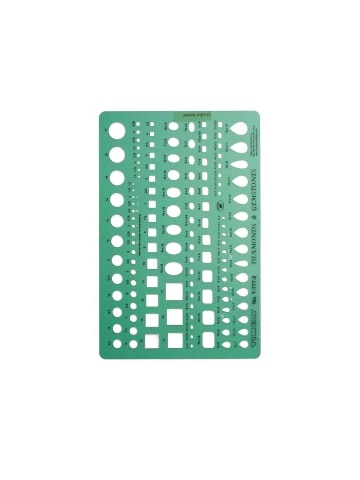
Template ruler
Ruler with predefined shapes (circles, ovals, ellipses...) that allows the designer quickly and accurately reproduce recurring shapes in jewelry, like the outline of a stone or a setting.
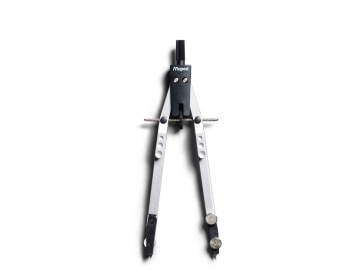
Compass
A two-armed tool with one arm holding a dry point and the other a lead, used for drawing circles and arcs as well as for transferring measurements.
Training opportunities
Training programs are available as of 9th grade, as well as for high school graduates and professionals looking to change careers. Whether you are entering the job market or embarking on a new path, this interactive map will help you find a training program close to home.
Jewelry professions
-
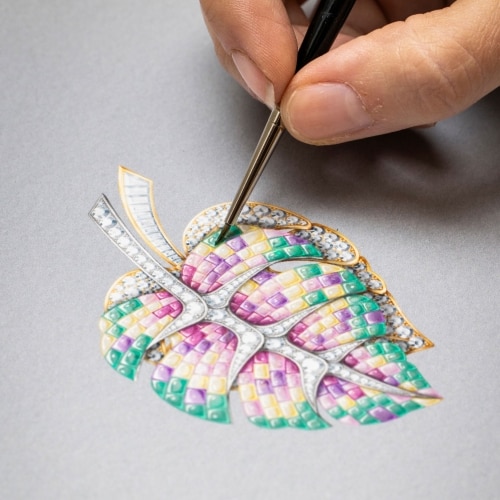
Gouache designer
Wielding a paintbrush, these creative professionals create an artistic rendering that perfectly captures the final piece.
-
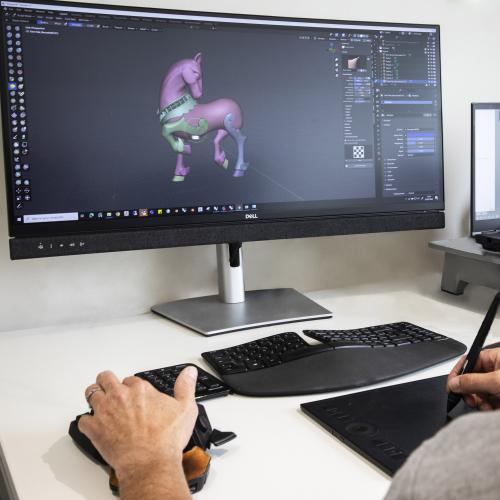
3D designer
Starting from sketches, these creative professionals design digital models of jewelry pieces.
-
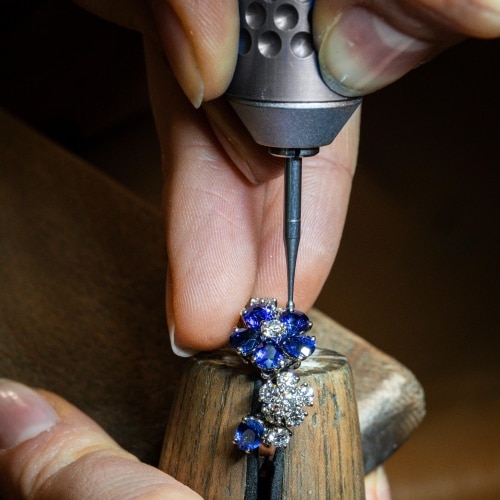
Gem setter
The role of gem setters is to adorn jewelry pieces with stones, either precious (diamonds, rubies, sapphires and emeralds), or ornamental (turquoise, lapis lazuli, onyx, etc.).
-
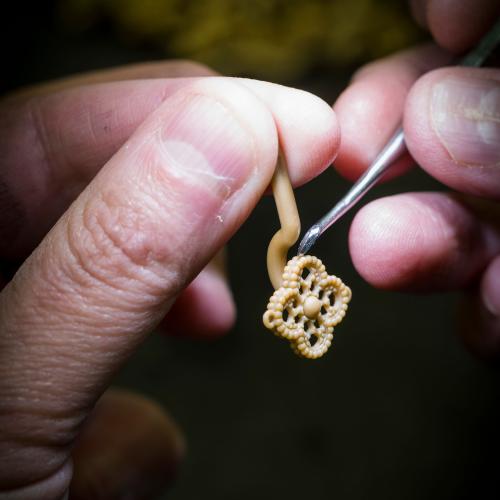
Caster
Casters transform three-dimensional wax or resin models of jewelry creations into fully formed gold pieces.
-
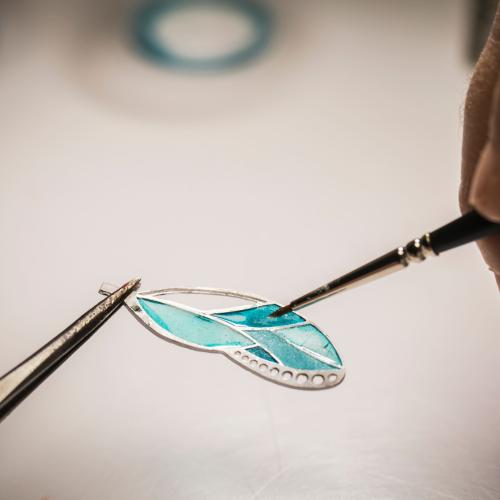
Enameler
Enamelers are craftsmen specialized in the creation of jewelry pieces and watches using enamel.